
NEENV
Innovation & LeadershipA Long-Term Bet on National Capability
Building innovators and leaders first; letting outcomes follow.
When we talk about building a strong nation, we often jump straight to outcomes—exams cleared, selections made, companies built, uniforms worn. But capability does not appear at the moment of selection. It is built quietly, over years, in how a person learns to think, how they respond to responsibility, and how they behave when there is no script to follow.
The idea being explored under the Umed Singh Mahra Centre for Innovation and Leadership (USMCIL) starts from this premise: national capability is fundamentally a human problem. Technology, institutions, and systems matter, but they are only as strong as the people who design, operate, and lead them.
"The purpose is singular and explicit: To build national capability by developing innovation-ready minds and leadership maturity from an early age."
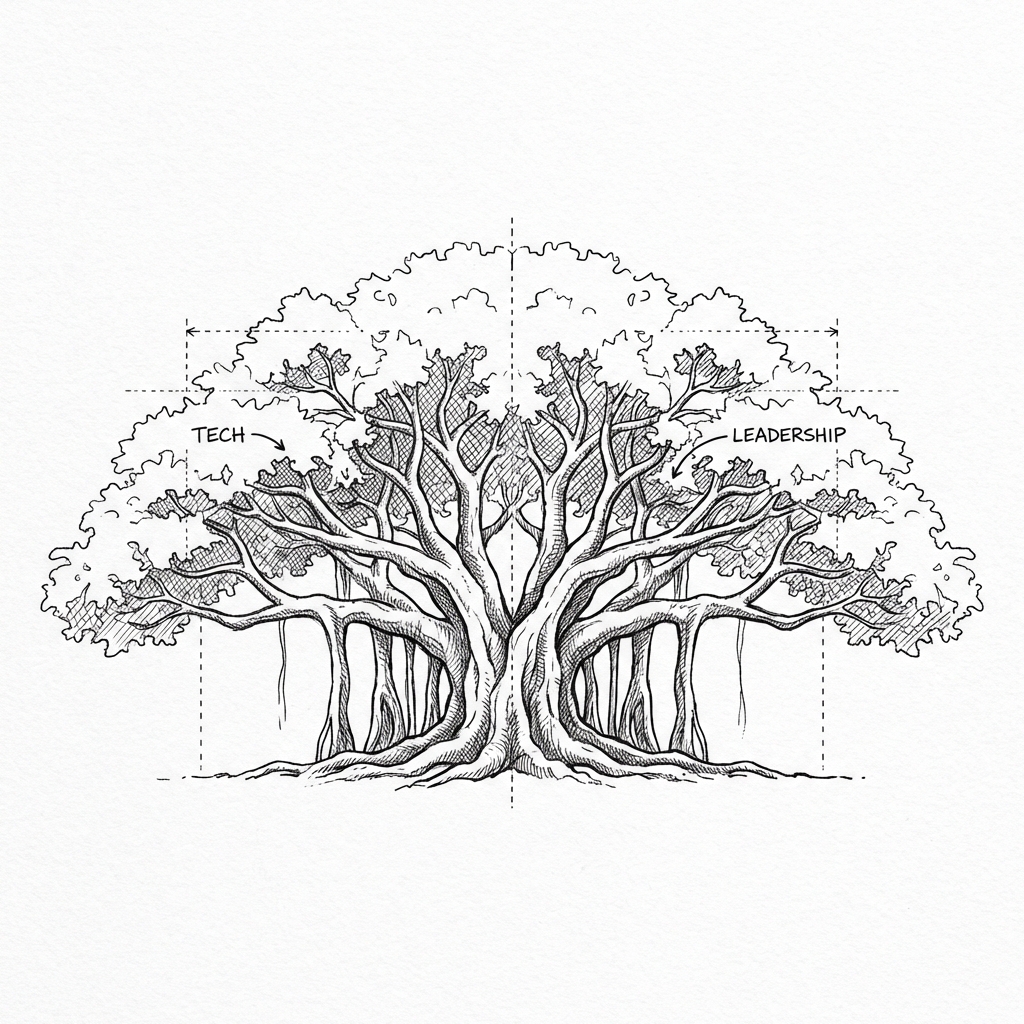
The Core Idea
Capability does not suddenly appear at the moment of selection or appointment. It compounds gradually—through years of disciplined learning, exposure to responsibility, and leadership practice.
This initiative proposes a long-horizon pipeline, beginning at Class 9, ensuring that talent is identified early, late entrants are not excluded, and no effort is ever wasted.
Identify Early
Catching curiosity before it fades.
No Dead Ends
Non-selection is not failure; capability remains.
Compound Growth
Years of quiet building over instant results.
Structure of the Program
Three strategic entry points for capability building.
Class 9
Foundation in Thinking
Academics
Math & Physics as tools for reasoning. Focus on conceptual clarity and problem decomposition, not rote learning. Includes Computer Science Fundamental subjects aligned with CBSE and State board curriculum.
Leadership
Communication, discipline, initiative. Early exposure to responsibility and group dynamics.
Class 11
Consolidation & Direction
Academics
Physics & Math at analytical depth. Applied problem solving and structured thinking for competitive pathways. Includes Computer Science Fundamental subjects aligned with CBSE and State board curriculum.
Leadership
Decision-making under observation. Responsibility in group settings. Explicit SSB readiness and NDA pathway.
After Class 12
Technical & Systems
Technical
B.Sc. IT/Cyber Security + AMIE (Electronics). Focus on computing, cyber, and systems thinking.
Pathways
Preparation for CDS, AFCAT, TGC. Applied leadership in complex environments. Entrepreneurship as a valid outcome.
Entrepreneurship as Service
The same training that prepares individuals for institutional and defence roles also prepares them for entrepreneurship. Participants learn to identify real problems, assess risk, and execute under constraints.
In this view, entrepreneurship is not a private pursuit; it is another form of national service.
How Outcomes Are Viewed
-
Selection into defence is respected.
-
Non-selection is not considered failure.
-
Every participant exits with strong analytical ability, technical competence, and leadership maturity.
Ready for the Long Bet?
"It is not a coaching program, and it is not a promise of outcomes. It is a long-term bet—that if we invest patiently in how people think and lead, the nation will see the returns across many fronts."